Most exterior problems announce themselves late, long after the cheap moment to fix them has passed. A little attention each season keeps small issues small, protects the structure of the house and keeps the garden looking cared for rather than merely surviving.
Begin With Water and Where It Goes
Before planting or painting anything, walk the perimeter of your home during heavy rain if you can, and again an hour afterwards. Water should be leaving the roof through gutters, travelling down downspouts, and moving away from the walls rather than pooling beside the foundation. Blocked gutters and short downspouts cause more hidden damage than most homeowners expect.
Check that soil and paving slope gently away from the building, and that garden beds are not mounded up against siding or brickwork. Where water has nowhere to go, a simple drainage channel or French drain will usually sort it out before it reaches the interior.
The Maintenance Nobody Notices Until It Fails
Sealant is the unsung hero of a dry home. Walk around once or twice a year with a tube of exterior caulk and look closely at window frames, door surrounds, utility penetrations and anywhere different materials meet. Replacing tired sealant takes an afternoon and prevents the kind of damp problem that takes weeks to resolve.
While you are there, look at trim, fascia and any exposed timber. Paint and stain are protective layers, not decoration, and touching them up as soon as they flake is far cheaper than replacing the boards underneath. After a storm, do the same walk again and check for lifted flashing, loose fixings and cracked tiles.
Plant for Your Climate, Not for a Photograph
Garden plans borrowed from another region rarely settle in happily. Spend time understanding your soil, how much sun each bed receives and how much water you are realistically willing to give. Plants suited to your conditions will look better with less work, and drought-tolerant choices are far kinder to a busy household than thirsty ones.
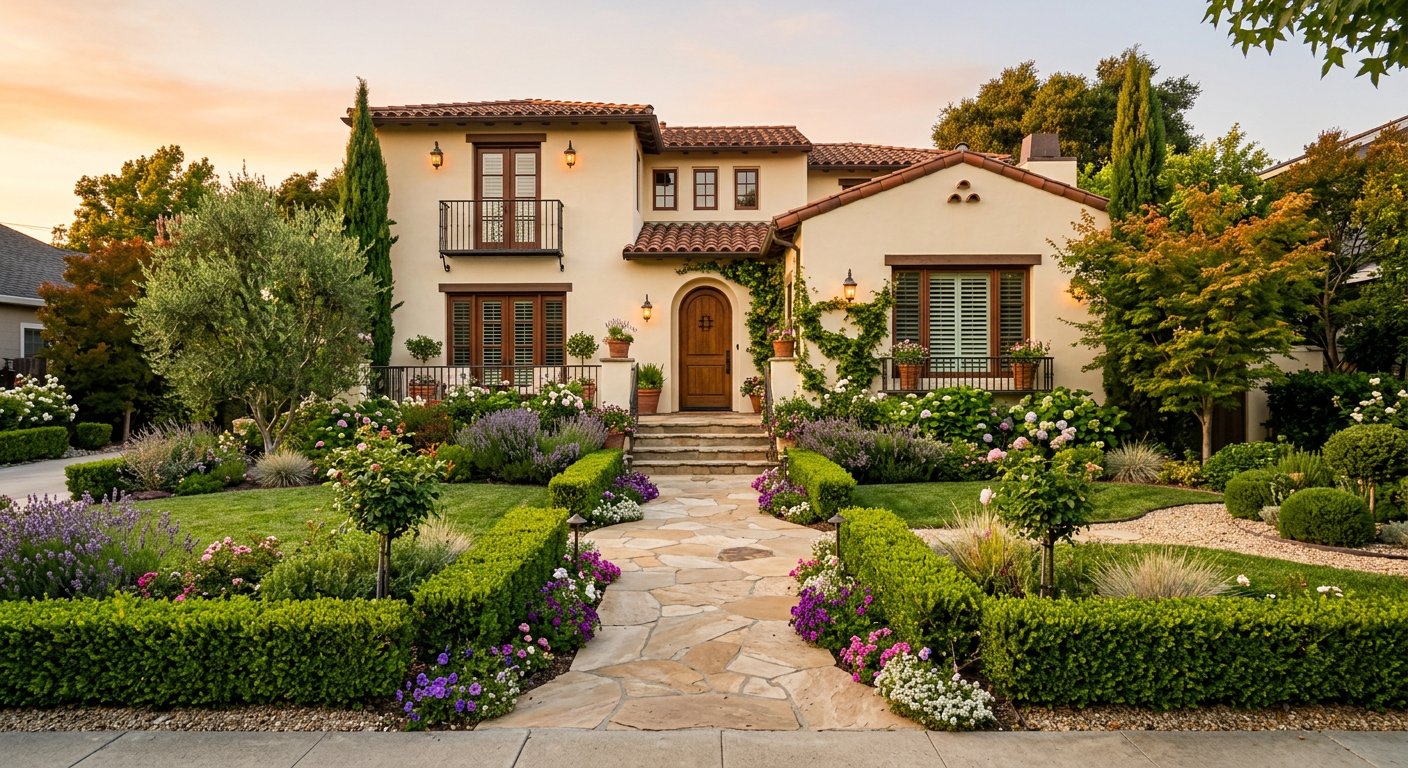
Mulch generously to hold moisture and keep weeds down, and group plants with similar water needs so you can water each grouping deeply rather than everything lightly. Structure matters too: clipped hedges, well-defined bed edges and a repeated shrub give a garden bones, so it still looks intentional in the quiet months when flowers are absent.
Paths, Steps and the Walk to Your Door
The route from the pavement to your front door deserves design attention. Loose gravel that migrates, uneven pavers that hold water and steps without contrast at the edges are safety issues as much as aesthetic ones. A firm, even path with visible edges makes a home feel welcoming before anyone knocks.
Layer your lighting instead of reaching for the brightest option available. Low, warm light along a path and a softer glow by the door greet guests without glare, and sensors handle the practical side for late arrivals and deliveries.
Make Your Evenings Outdoors Longer
A sheltered corner with comfortable seating changes how much a household uses its garden. Look for the spot that catches the late sun and shelters from prevailing wind, then place seating there rather than wherever a patio happens to exist. A pergola, a windbreak planting or a simple fixed awning can turn an unusable corner into the best place to sit.
Keep weather in mind when choosing outdoor furnishings: materials that tolerate sun and rain without constant care, cushions stored in a dry box, and furniture that is easy to move when a storm is forecast. Practical choices get used more often than precious ones.
A Rhythm of Upkeep That Suits You
Exterior care is easier when it follows the seasons rather than waiting for motivation. Clean gutters as leaves fall, seal cracks before the wet weather arrives, prune shrubs when growth slows, and give the whole exterior a careful look after any significant storm. Spread the work out and it never becomes an overwhelming weekend.
Curb appeal, in the end, is simply care made visible. A tidy path, sound trim, healthy planting and lighting that welcomes people home tell visitors that the rest of the house is looked after too. If you would rather hand the list to someone else, our exterior and garden team is happy to build a seasonal plan around your property.